You can't open a package of anything when you have a dog 🤣 pic.twitter.com/3utvGiPAH8
— Ucok (@Ucokkucokk) May 27, 2026
Wednesday, August 5, 2026
Food investigations

Tuesday, August 4, 2026
Sunday, August 2, 2026
The Canaan Dog
An Honest and Complete Guide
This is the desert dog that survived for centuries with little human help.
The Canaan Dog is Israel's national dog and one of the world's oldest surviving landrace-type breeds. It was shaped more by survival and environment than by modern selective breeding. A medium-sized, prick-eared, curly-tailed pariah dog that lived wild in the Negev Desert for generations, it was brought back into organized breeding programs in the twentieth century.
Loyal and devoted to its own people, the Canaan Dog remains reserved, independent, and highly territorial. It can make an outstanding companion for the right owner, but only for those who understand that this dog still decides for itself whether you are worth trusting.
TL;DR Canaan Dog Fast Facts
• National dog of Israel
• Lived as a wild desert pariah for centuries
• Trained to detect mines and carry messages for early Israeli forces
• Rare worldwide, with a relatively small global population
• Aloof with strangers, devoted to its family
• Not ideal for first-time or passive owners
• National dog of Israel
• Lived as a wild desert pariah for centuries
• Trained to detect mines and carry messages for early Israeli forces
• Rare worldwide, with a relatively small global population
• Aloof with strangers, devoted to its family
• Not ideal for first-time or passive owners

The Canaan Dog is a medium-sized, square-built, spitz-type dog with erect ears, a bushy tail curled over the back, and a dense double coat adapted to harsh desert conditions.
History of the Canaan Dog
Imagine a lean, prick-eared dog surviving largely on its own in the Negev Desert for centuries. According to breed tradition, dogs of this type remained after many of the people who had lived alongside them were displaced. Dogs resembling the Canaan Dog appear in Egyptian tomb paintings from around 2200 to 2000 BCE. An ancient dog cemetery in Ashkelon contains more than a thousand dogs whose general form resembles this regional pariah type. Bedouins later captured some of these desert dogs to guard flocks and camps.
In the 1930s, Dr. Rudolphina Menzel began collecting and breeding the best of these pariah dogs. She found they were remarkably adaptable and intelligent. They excelled as mine detectors, messengers, and guard dogs for the early Israeli forces, performing work that many European breeds could not handle in the heat. The breed was recognized by the Israeli Kennel Club in 1953 and by the American Kennel Club in 1997. Today it remains rare worldwide, with a relatively small global population.

Appearance
Canaan Dogs stand 19 to 24 inches tall and weigh 35 to 55 pounds. They have a wedge-shaped head, erect low-set ears, and a bushy tail that curls over the back. The coat is dense, harsh, and short to medium in length, built to handle extreme heat and cold. Colors include solid shades or predominantly white with a mask and patches. Everything about their lean, agile body reflects a dog shaped by generations of desert survival with little human intervention. The official American Kennel Club breed standard emphasizes a balanced, square body built for endurance and quick reaction.

Temperament
Living with a Canaan Dog means sharing your home with a dog that still carries the instincts of a free-ranging desert survivor. They are deeply devoted to their own people and form strong bonds within the family. At the same time they remain reserved and often aloof with strangers. They are highly territorial, quick to notice anything unusual, and willing to bark persistently to alert their people. They are intelligent and capable of learning quickly, yet they retain a strong independent streak. They do not live to please humans the way many modern breeds do. They decide for themselves whether a situation requires action. Early and ongoing socialization is essential so their natural caution does not harden into excessive suspicion.
Are Canaan Dogs Good Family Dogs?
Canaan Dogs can make excellent family dogs for experienced owners who understand primitive breeds. They are usually gentle and affectionate with children they have been raised with, provided the children respect their space. They are less suitable for homes with constant visitors, very young children who may overwhelm them, or owners who want a dog that greets every stranger with enthusiasm. Their territorial nature and tendency to bark make them better suited to households that can provide structure, clear leadership, and consistent socialization from an early age.
Care and Daily Needs
Canaan Dogs need more than casual attention. They require:
- Daily exercise and mental stimulation: at least 45 to 60 minutes of activity plus opportunities to use their sharp senses. Without enough outlets, boredom can lead to excessive barking or restless behavior.
- Patient, consistent training: they learn quickly but test boundaries. Positive methods combined with clear rules work best. Harsh methods usually backfire.
- Socialization: early and ongoing exposure to people, places, and other animals is critical to keep their natural wariness under control.
- Grooming and feeding: the dense coat needs regular brushing, especially during seasonal sheds, and a high-quality diet suited to their size and activity level. They are naturally clean dogs.
Health Considerations
Canaan Dogs are generally hardy and often live 12 to 15 years. Responsible breeders still screen for hip dysplasia, elbow issues, and eye conditions. Because the breed is rare, the gene pool is relatively limited, so careful selection of breeding stock is important. Regular veterinary care and maintaining a healthy weight help keep them active well into their teens.
Cost of Owning a Canaan Dog
Puppies from responsible breeders typically cost $1,500 to $2,500 or more because the breed remains rare. The first year can run $2,500 to $4,000. Ongoing annual costs are usually $1,200 to $2,000. The larger commitment is earning trust, managing territorial instincts, and socializing a dog that naturally approaches the unfamiliar with caution.
Is a Canaan Dog Right for You?
Canaan Dogs suit experienced, confident owners who respect a dog that still thinks for itself. They need people who understand that earning this dog's trust is a process, not an assumption. Thorough socialization is equally important. A Canaan Dog without a clear role may begin patrolling boundaries you never realized existed. It does not wait for permission to watch over its people. It simply does.
Share your experiences with the Canaan Dog in the comments. What surprised you most about living with this ancient desert survivor?
Official links are included for further reading from recognized organizations. Images via k9rl.com, CC BY-SA 4.0.
Saturday, August 1, 2026
Friday, July 31, 2026
Carl is going to have a very good day
@shescountry1988 Mr. Carl ❤️ the best good mornings #fyppppppppppppppppppppppp #sheep #cookies #lovehim #dog ♬ original sound - NorthCountryGirl88
Thursday, July 30, 2026
Doggy magic bus ride
@rock.n.rollin.rove These Rovers definitely know how to take care of business! #roverbus #dogbus #doggydaycarelife #dogfriendship #takingcareofbusiness ♬ original sound - David Mowles
Monday, July 27, 2026
Sunday, July 26, 2026
The Schipperke
An Honest and Complete Guide
Belgians once called this dog the Little Black Devil. One look at how it runs a household and you understand why.
The Schipperke (pronounced SKIP er kee, not SHIP er kee) is a small Belgian breed with an oversized personality. Originally a watchdog and ratter on canal barges, this fox faced black dog is fearless, independent, and acts as though every decision in the house ultimately belongs to it. Loyal and energetic with its people, the Schipperke can make a fantastic companion, but only for owners who can handle a tiny dog that believes it is in charge of everything.
TL;DR Schipperke Fast Facts
• Nicknamed the “Little Black Devil” for good reason
• Had its own specialty dog show as early as 1690
• Small, black, dense coated, fox like face
• High energy, fearless, and highly alert
• Independent and intelligent
• Not ideal for first time or low energy owners
• Nicknamed the “Little Black Devil” for good reason
• Had its own specialty dog show as early as 1690
• Small, black, dense coated, fox like face
• High energy, fearless, and highly alert
• Independent and intelligent
• Not ideal for first time or low energy owners

Photo via k9rl.com, CC BY-SA 4.0
The Schipperke is a small, sturdy, usually solid black dog with a thick double coat, upright ears, and a distinctive fox like expression.
History of the Schipperke
Picture a tiny black dog standing on the deck of a Belgian canal barge in the 1600s, barking at every stranger who approached, chasing rats through the cargo hold, and acting as if it alone kept the entire vessel safe. That was the Schipperke’s original job. Its name likely comes from the Flemish for “little captain” or “little boatman,” but Belgians also called it the Little Black Devil because of its bold, almost fearless attitude. That same confident spirit was already on display when the breed held its own specialty dog show as early as 1690, one of the earliest single breed shows on record. Queen Marie Henriette of Belgium later helped popularize it as a house dog. The first Schipperkes arrived in the United States in 1888, and the American Kennel Club recognized the breed in 1904.

Historical illustration via k9rl.com, CC BY-SA 4.0
Appearance
Schipperkes stand 10 to 13 inches tall and weigh 10 to 16 pounds. They have a dense double coat with a distinctive ruff around the neck and longer “culottes” on the hind legs. The coat is usually solid black. In the United States the tail is typically docked or naturally short. In many other countries natural tails are required. Their wedge shaped head, upright ears, and bright expression give them a fox like look that matches their constant curiosity and vigilance. The official American Kennel Club breed standard emphasizes a cobby, thickset body and an alert, curious expression.

Photo via k9rl.com, CC BY-SA 4.0
Temperament
Living with a Schipperke feels like sharing your home with a tiny, self appointed supervisor. They investigate every sound, inspect every visitor, and announce anything that seems out of place. They are intelligent, curious, and full of energy, but also independent and sometimes stubborn. Their fearless attitude is exactly why Belgians once called them the Little Black Devil. They make excellent watchdogs and will bark to alert you, yet they remain deeply loyal to their own people. Early socialization is essential, because without it their wariness of strangers can become sharp and persistent.
Are Schipperkes Good Family Dogs?
Schipperkes can work well in active households with older children who understand how to respect a small dog’s space. They are playful and affectionate with their own people once properly socialized. They are less ideal for homes with very young children because of their intensity, tendency to become overstimulated, and natural urge to monitor and correct what they see as disorder. Experienced owners who can provide structure and consistent leadership tend to get the best results from this breed.
Care and Daily Needs
Schipperkes need more than a short walk around the block. They require:
- Daily exercise and mental stimulation: at least 45 to 60 minutes of activity plus training or puzzle toys. Without enough outlets, boredom quickly turns into excessive barking or inventive mischief.
- Patient, consistent training: they learn quickly but test boundaries. Positive methods paired with clear rules work best.
- Socialization: early and ongoing exposure to people, places, and other dogs helps keep their natural wariness under control.
- Grooming and feeding: the dense coat needs regular brushing, especially during seasonal sheds, and a high quality diet suited to their size and activity level.
Health Considerations
Schipperkes are generally robust little dogs and often live 12 to 16 years. Even so, responsible breeders still screen carefully for patellar luxation, Legg Calve Perthes disease, eye issues, thyroid problems, and the breed specific condition MPS IIIB, a serious neurological storage disease found only in Schipperkes. Regular veterinary care and a healthy weight help keep them active well into their teens.
Cost of Owning a Schipperke
Puppies from responsible breeders typically cost $1,200 to $2,500. The first year can run $2,000 to $3,500. Ongoing annual costs are usually $1,000 to $1,800. Despite their small size, the real investment is not just food and veterinary care. These dogs need consistent training and mental engagement to stay happy and out of trouble.
Is a Schipperke Right for You?
Schipperkes suit active, patient owners who enjoy a small dog with a big attitude and a strong sense of purpose. They need people who can give them problems to solve and who understand that this dog will always try to keep tabs on the household. This is not a quiet lap dog that simply follows you around. It is a little black devil that will bark at anything suspicious and invent its own jobs if you do not give it enough to do. Leave a Schipperke without a job and it will happily appoint itself neighborhood security chief. In a Schipperke’s mind, the house has a captain, and that captain is never you.
Share your experiences with the Schipperke in the comments. What surprised you most about living with this little black devil?
Always check and follow local laws regarding dog breeds. Official links are included for further reading from recognized organizations.
Saturday, July 25, 2026
Two choices in life
@who5walkingwho Get a dog? Don't get a dog? 🐶 ✨#dog #chocies #goldenretriever #labrador #dogsoftiktok ♬ original sound - JulesGG23
Thursday, July 23, 2026
Ty but no ty please
@biscuitsandbath.nyc “no thank you… actually no thank you… I said NO THANK YOU.”
♬ Tchaikovsky "Dance of the Reed Flutes"(1257471) - kzy
Wednesday, July 22, 2026
Tuesday, July 21, 2026
Saturday, July 18, 2026
The loyal companion
@kilgore.trout7 A Message From The Sons of Thomas Paine “Companions of The Republic” #revolution #activism #education #unitedstates #dogs ♬ original sound - Sons of Thomas Paine
Thursday, July 16, 2026
The love in those eyes
@suchapolaris Teddy loves to ride on the tractor #golfcoursemaintenance #teddy #dogsoftiktok #golfcoursesuperintendent #lab ♬ Here Comes the Sun - JJ Heller
Wednesday, July 15, 2026
Tuesday, July 14, 2026
Meet the runners
@diamondsportdogs Fun run the pups had tonight! We also launched a t shirt monthly subscription to support our fosters and rescue rehabs! Go check it out I am so excited to share these designs with you ❤️
♬ original sound - FunkyMusicPedia
Monday, July 13, 2026
Sunday, July 12, 2026
Saturday, July 11, 2026
Band name: The Beagles
@thekiffness What's this band called? 🐶🎸🥁🎤 #dog #dogsofttiktok #dogtok ♬ original sound - The Kiffness
Thursday, July 9, 2026
Wednesday, July 8, 2026
Bcs he is our friend
@texthelabradorretriever I didn’t plan on crying today but this sent me over the edge😭😭😭😭😭 #labradorretriever #dogsoftiktok #souldog #bestfriend #blacklab ♬ original sound - texthelabradorretriever
Tuesday, July 7, 2026
Friday, July 3, 2026
Inside wipers
@rachela56 Never a dull moment with this weirdo #doberman #dog ♬ sonido original - ⚡Albondiga95⚡
Thursday, July 2, 2026
Song is, "Every 1's a Winner" by Hot Chocolate (1978)
@pamperedpupnj Ears flapping, tails wagging, snow flying everywhere❄️☃️🐾 #fyp #snow #snowdogs #doggiesoftiktok #newjersey ♬ original sound - teeharpo
Wednesday, July 1, 2026
"We are the best diggers ever!!!" --The Little Guy
@vahinice Mon papou d’amour & bridou travaillent ensemble depuis presque 13 ans ❤️ #pov #jackrussellsoftiktok #amourinfini ♬ Another Love - Simon Clayton & Saymon Guitar & Soft Notes & Revelations
Tuesday, June 30, 2026
Meanie
@yashi_131313 ไม่ได้เจอ(พี่พลอล่า🐈)1อาทิต คิดถึงใช่ไหม?ตัวตึงของบ้าน(คาวะ🐶)
♬ เสียงต้นฉบับ - หมายักษ์(ยาชิ🐶) - หมายักษ์(ยาชิ🐶)(คาวะ🐶)
Monday, June 29, 2026
Thursday, June 25, 2026
Wednesday, June 24, 2026
Friday, June 19, 2026
Something tells me they're not listening to her
@bustersworld4 At this point he thinks rain means CCR and pool time 🌧️🐾 #labrador #dogsoftiktok #labmom #dogmom #fyp ♬ Have You Ever Seen The Rain - Creedence Clearwater Revival
Thursday, June 18, 2026
Wednesday, June 17, 2026
Tuesday, June 16, 2026
Sunday, June 14, 2026
Saturday, June 13, 2026
Friday, June 12, 2026
Thursday, June 11, 2026
Wednesday, June 10, 2026
Tuesday, June 9, 2026
Snow is fuel
@annatherescue In honor of the snow storm.. who remembers this one? 😂😭 we hope you all stay warm and safe out there besties! #onthisday #fyp #dogsoftiktok #pitties ♬ Cool Attitude (Vox) - Ah2
Monday, June 8, 2026
I'm chillin'...
@winnie.andwilbur sos there is a polar bear in my backyard #saintbernard #cute #funny ♬ original sound - Winnie and Wilbur
Friday, June 5, 2026
"Get me a snorkel..."
@thecrazydoggirl Too good not to post again once in awhile #doglove #cutedogs #dogsoftiktok #petfunny #doglovers ♬ original sound - brianne & your dog probably
Thursday, June 4, 2026
Wednesday, June 3, 2026
Sunday, May 31, 2026
My toy will feel my emotions
@barneythetvbordercollie Barney learns we are here to love and be loved.#theboythemolethefoxandthehorse #reaction #react ♬ original sound - Barney the Tv border collie
Saturday, May 30, 2026
Thursday, May 28, 2026
Wednesday, May 27, 2026
Sunday, May 24, 2026
The Otterhound
The Otterhound: An Honest and Complete Guide
This is the giant, shaggy, webbed-footed hound bred to hunt otters in icy British rivers — and it still smells like one.
The Otterhound is one of the rarest breeds on Earth, with fewer individuals alive than Giant Pandas. A massive, rough-coated, pack-oriented hunter with an unmatched ability to track scent in water, it is equal parts gentle giant and boisterous adventurer. Loyal and affectionate with its people, the Otterhound can be a wonderful companion — but only for those who can handle its size, energy, loud voice, and strong-willed personality.
TL;DR – Otterhound Fast Facts
• Rarer than Giant Pandas
• Massive, shaggy water dog with webbed feet
• Legendary scenting ability (even underwater)
• Boisterous, affectionate, and pack-oriented
• Not for small homes or low-energy owners
• Rarer than Giant Pandas
• Massive, shaggy water dog with webbed feet
• Legendary scenting ability (even underwater)
• Boisterous, affectionate, and pack-oriented
• Not for small homes or low-energy owners

The Otterhound is a large, powerful dog with a dense, rough double coat, webbed feet, and a kind, intelligent expression.
History of the Otterhound
The Otterhound was developed in medieval England to hunt otters that were depleting fish stocks in rivers. These big, rugged hounds worked in packs, using their exceptional swimming ability and powerful noses to track otters underwater and on land. When otter hunting was banned in the UK in 1978, the breed nearly disappeared. Dedicated enthusiasts saved it, but it remains extremely rare today. The American Kennel Club recognized the breed in 1909.
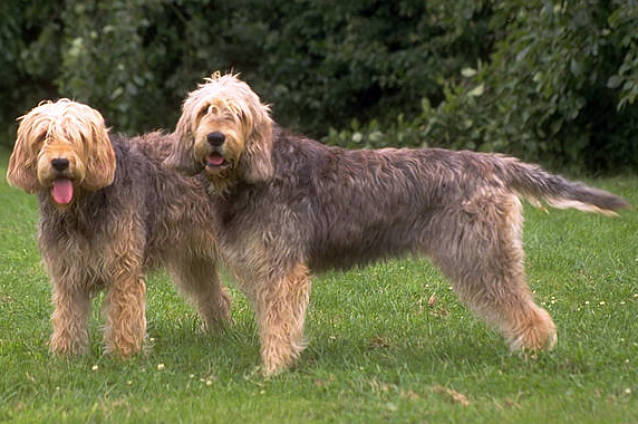
Otterhound head portrait (image from Wikimedia Commons, free to use)
Appearance
Otterhounds stand 24 to 27 inches tall and weigh 80 to 115 pounds. They have a thick, rough, waterproof double coat that can be any color (often grizzle, black & tan, or liver). Their large webbed feet, powerful shoulders, and strong tail make them exceptional swimmers. Their long, pendulous ears and kind expression complete the look of a rugged, medieval working hound. The official American Kennel Club breed standard emphasizes strength, endurance, and the ability to work in water.

Otterhound running (image Photo: k9rl.com via CC BY-SA 4.0)
Temperament
Otterhounds are boisterous, affectionate, and pack-oriented. They are known for their loud, deep baying voice and their joyful, sometimes clumsy enthusiasm for life. They are gentle with their families but can be independent and strong-willed. Their incredible nose means they are easily distracted by scents. Owners often describe them as big, happy clowns who love people but need room to be themselves. Early socialization and patient, positive training are essential.
Are Otterhounds Good Family Dogs?
Otterhounds can make excellent family dogs for active households with older children. They are affectionate, playful, and tolerant when properly socialized. However, their large size, high energy, and strong prey drive make them unsuitable for homes with very young children or small pets. They do best with experienced owners who can provide plenty of exercise and space.
Care and Daily Needs
Otterhounds require:
- Daily exercise and mental stimulation — at least 60–90 minutes of vigorous activity. They love swimming, hiking, and scent work. Without it, they can become destructive or overly vocal.
- Patient, consistent training — they are intelligent but independent. Positive methods and clear leadership work best.
- Socialization — early and ongoing exposure to people, places, and other dogs helps manage their boisterous nature.
- Grooming and feeding — regular brushing to manage the rough coat and a high-quality diet suited to their large size.
Health Considerations
Otterhounds typically live 10 to 12 years. They can be prone to hip dysplasia, elbow issues, and epilepsy. Responsible breeders screen carefully. Because the gene pool is small, finding a healthy puppy from ethical breeders is important.
Cost of Owning an Otterhound
Due to extreme rarity, puppies from responsible breeders often cost $2,500 to $4,000 or more. The first year can easily exceed $4,000. Ongoing annual costs are typically $1,500–$2,500. They are not a low-maintenance or inexpensive breed.
Is an Otterhound Right for You?
Otterhounds suit active, patient owners with space, time, and experience handling large, independent hounds. They thrive with people who appreciate their joyful, sometimes chaotic personality and can give them purpose. Life with an Otterhound is loud, wet, affectionate, and rarely boring. Without proper exercise and leadership, this breed will create its own fun — usually at high volume. If you already have one, daily adventures and affection will keep your Otterhound happy and bonded to you.
Share your experiences with the Otterhound in the comments. What surprised you most about living with this rare and wonderful breed?
Always check and follow local laws regarding dog breeds. Official links are included for further reading from recognized organizations.
The Snow Runner
@sanderscottleelanau Life in a Northern town. #deedeerunsrealestate ♬ Life in a Northern Town - The Dream Academy
Friday, May 22, 2026
Thursday, May 21, 2026
Wednesday, May 20, 2026
Sunday, May 17, 2026
Rook Raggy! Rit's a Rock!!!
@afvofficial A good boy with a good slide 😌 #afv #dogs #funny ♬ original sound - AFVofficial
Saturday, May 16, 2026
The Nova Scotia Duck Tolling Retriever: An Honest and Complete Guide
The Nova Scotia Duck Tolling Retriever: An Honest and Complete Guide
This dog doesn’t just retrieve ducks. It tricks them — by pretending to be a fox.
The Nova Scotia Duck Tolling Retriever is the only breed in the world developed specifically to lure waterfowl within shotgun range by playing and prancing along the shoreline like a fox. With its striking red-gold coat, tireless energy, and clownish personality, the Toller is a high-drive, intelligent companion that can be a fantastic family dog — but only for owners ready to match its intensity.
TL;DR – Nova Scotia Duck Tolling Retriever Fast Facts
• The “fox-playing” duck lure dog
• Smallest of the retriever breeds (35–50 lbs)
• Extremely high energy and intelligent
• Loves water, games, and having a job
• Not for low-activity or first-time owners
• The “fox-playing” duck lure dog
• Smallest of the retriever breeds (35–50 lbs)
• Extremely high energy and intelligent
• Loves water, games, and having a job
• Not for low-activity or first-time owners

The Nova Scotia Duck Tolling Retriever (Toller) is a medium-sized, compact, powerfully built dog with a striking red to orange-red coat and white markings.
History of the Nova Scotia Duck Tolling Retriever
Developed in the early 1800s in Nova Scotia, Canada, the Toller was created to “toll” — to lure ducks by running, jumping, and playing along the shore like a fox. Breeders combined retriever, spaniel, and collie stock to produce a dog that could both decoy and retrieve waterfowl. The breed remained largely unknown outside Canada until the mid-20th century. The American Kennel Club recognized the Toller in 2003.

Nova Scotia Duck Tolling Retriever portrait (image from Wikimedia Commons, CC BY 2.0)
Appearance
Tollers stand 17 to 21 inches tall and weigh 35 to 50 pounds. They have a medium-length, water-repellent double coat in rich red and orange with white markings. Their feathered tail is carried high and wags constantly when excited. They are compact, athletic, and built for both speed and endurance. The fox-like red coat helps them blend into autumn foliage while working. The official American Kennel Club breed standard emphasizes balance, agility, and that distinctive coloring.

Nova Scotia Duck Tolling Retriever running (image from Wikimedia Commons, CC BY-SA 3.0)
Temperament
Nova Scotia Duck Tolling Retrievers are intelligent, eager to please, and full of playful energy. Owners often describe them as having the heart of a comedian trapped in a working dog’s body. They are affectionate with their families and love being involved in everything. They have a strong work drive and thrive when given a job. While generally friendly, they can be reserved with strangers and retain a strong prey drive. Early socialization and consistent, positive training bring out their best.
Are Nova Scotia Duck Tolling Retrievers Good Family Dogs?
Nova Scotia Duck Tolling Retrievers can make excellent family dogs for active households. They are playful, loyal, and great with older children when properly socialized. Their high energy and love of games make them wonderful playmates, but they are not ideal for homes that want a low-energy lap dog or that have very small pets. They do best with owners who can provide daily exercise, training, and mental stimulation.
Care and Daily Needs
Nova Scotia Duck Tolling Retrievers require:
- Daily exercise and mental stimulation — at least 60 minutes of vigorous activity such as retrieving, hiking, agility, or swimming. Without it, boredom quickly turns into excessive barking or destructive behavior.
- Structured training — they are highly intelligent and eager to please but need clear rules and positive methods to channel their energy.
- Socialization — early and ongoing exposure to people, places, and other dogs prevents shyness or over-excitability.
- Grooming and feeding — moderate shedding with weekly brushing and a high-quality diet suited to their active lifestyle.
Health Considerations
With proper care, Tollers typically live 12 to 14 years. Responsible breeders screen for hip and elbow dysplasia, progressive retinal atrophy, and thyroid issues. They are generally hardy and athletic when given appropriate exercise and nutrition.
Cost of Owning a Nova Scotia Duck Tolling Retriever
Puppies from responsible breeders usually cost $1,800 to $3,500. The first year can run $2,500–$4,000. Ongoing annual costs are typically $1,200–$2,000. They are not the cheapest breed due to relative rarity and the need for an active lifestyle.
Is a Nova Scotia Duck Tolling Retriever Right for You?
Nova Scotia Duck Tolling Retrievers suit active, engaged owners who enjoy training, outdoor adventures, and a dog with a unique sense of humor. People who fall in love with a Toller tend to become lifelong fans of the breed. This is not a dog that blends into the background. It brings playfulness, intelligence, and a one-of-a-kind tolling instinct into your home. Without proper outlets and structure, this breed will create its own entertainment — often in ways you won’t appreciate. The Toller is proof that the cleverest hunters in the marsh aren’t always the ones with wings.
Share your experiences with the Nova Scotia Duck Tolling Retriever in the comments. What surprised you most about living with this remarkable breed?
Images sourced from Wikimedia Commons. Official links are included for further reading from recognized organizations.
Friday, May 15, 2026
Wednesday, May 13, 2026
Tuesday, May 12, 2026
Sunday, May 10, 2026
Saturday, May 9, 2026
The Norwegian Lundehund
The Norwegian Lundehund: An Honest and Complete Guide
The Norwegian Lundehund is one of the rarest and most extraordinary dog breeds on the planet — a living piece of Viking-era history with physical abilities found in no other dog. Originally bred to hunt puffins on sheer Norwegian cliffs, this small, agile spitz-type has six toes on each foot, an incredibly flexible neck, and shoulders that rotate like no other breed. Loyal and energetic, it can be a wonderful companion, but its independent spirit and unique needs make it a challenge for most owners. Whether you are thinking about your first Norwegian Lundehund or you already have one, here are the real facts about this one-of-a-kind breed.

The Norwegian Lundehund is a small, rectangular, and remarkably flexible dog with a dense double coat and distinctive markings.
History of the Norwegian Lundehund
Originating on the remote island of Værøy in northern Norway, the Lundehund was developed specifically to hunt puffins in narrow caves and on steep cliffs. Written records date back to the 1500s, but the breed nearly vanished in the 20th century when puffin hunting was banned and canine distemper decimated the population. Dedicated Norwegian breeders saved it from extinction. Today it remains one of the rarest breeds in the world. The American Kennel Club recognized the breed in 2011.

Norwegian Lundehund showing erect ears (image from Wikimedia Commons, free to use)
Appearance
Norwegian Lundehunds stand 12 to 15 inches tall and weigh 13 to 20 pounds. They have six toes on each foot, extremely flexible necks that can bend backward until the head touches the back, and shoulders that allow them to crawl into tight spaces. Their ears can fold and clamp shut to protect against dirt and water. The official American Kennel Club breed standard highlights this extraordinary flexibility and agility.

Norwegian Lundehund profile (image from Wikimedia Commons, free to use)
Temperament
Norwegian Lundehunds are alert, energetic, and fiercely loyal to their families. They are playful and clever but can be independent and strong-willed. Many are wary of strangers and have a sensitive nature that responds best to gentle, positive training. Owners often describe them as curious little problem-solvers that always seem to be studying the world around them. They form tight bonds with their people and want to be involved in daily life. This is a thinking breed that was designed to solve problems on its own in dangerous cliff terrain — nature built this dog for cliffs, caves, and impossible terrain, and it still acts like it.
Are Norwegian Lundehunds Good Family Dogs?
Norwegian Lundehunds can make excellent family dogs in the right home. They are playful and loyal with their own people and often do well with older children when properly socialized. However, they are not ideal for homes with very young kids or small pets, as they retain a strong prey drive from their puffin-hunting days. They thrive with experienced owners who understand their independent nature and can provide structure without harsh methods.
Care and Daily Needs
Norwegian Lundehunds require:
- Daily exercise and mental stimulation — at least 45-60 minutes of vigorous activity such as hiking, agility, or climbing. Without it, boredom leads to mischief or excessive barking.
- Patient, positive training — they are intelligent but can be stubborn. Harsh methods damage their sensitive nature.
- Socialization — early and ongoing exposure to people, places, and other dogs helps reduce wariness.
- Grooming and feeding — moderate shedding with weekly brushing and a high-quality, low-fat diet to support their often sensitive digestive system.
Health Considerations
Norwegian Lundehunds are generally hardy but can suffer from Lundehund syndrome (a serious digestive disorder), patellar luxation, and eye issues. Responsible breeders screen carefully. Regular veterinary check-ups and a low-fat diet are important for long-term health. With good care, they typically live 12 to 15 years.
Cost of Owning a Norwegian Lundehund
Because the breed is so rare, puppies from responsible breeders usually cost $2,000 to $4,000 or more. The first year can easily reach $3,000–$5,000. Ongoing annual costs are typically $1,200–$2,000. They are not a low-cost breed due to rarity and potential health needs.
Is a Norwegian Lundehund Right for You?
Norwegian Lundehunds suit experienced, patient owners who can provide daily physical and mental challenges and gentle leadership. People who fall in love with the Norwegian Lundehund tend to become lifelong advocates for the breed. This is not a dog that blends into the background. It brings agility, intelligence, and a piece of living history into your home. Without proper outlets and structure, this breed will create its own adventures — often in ways you won’t appreciate. If you already have one, consistent positive engagement will keep your Lundehund happy, confident, and bonded to you.
Share your experiences with the Norwegian Lundehund in the comments. What do you love most about this rare and remarkable breed? If you are considering one, take time to understand its unique needs and extraordinary abilities.
Share this guide with others looking for honest information about the Norwegian Lundehund.
Always check and follow local laws regarding dog breeds. Official links are included for further reading from recognized organizations.
Friday, May 8, 2026
Tuesday, May 5, 2026
Sunday, May 3, 2026
The Manchester Terrier
The Manchester Terrier: An Honest and Complete Guide
The Manchester Terrier is one of the most underrated small breeds — fast, sharp, and far more capable than most people expect. Sleek, racy, and full of true terrier spirit, it combines the grace of a hound with the alertness of a ratter. Loyal and lively, it can be a fantastic companion, but it has a strong personality that needs an owner who can keep up. Whether you are thinking about your first Manchester Terrier or you already have one, here are the real facts about this spirited breed.

The Manchester Terrier comes in two sizes: Standard (up to 22 pounds) and Toy (up to 12 pounds). Both are black with rich tan markings, short glossy coats, and an alert, athletic build.
History of the Manchester Terrier
Developed in 19th-century England, the breed was named after the city of Manchester. Breeders crossed the Black and Tan Terrier with Whippets to create a fast, efficient ratter and companion. The American Kennel Club recognized the varieties in the late 1800s. Today the Manchester Terrier is valued as a lively family dog and show competitor rather than just a working ratter.

Manchester Terrier showing erect ears (image from Wikimedia Commons, free to use)
Appearance
Manchester Terriers are sleek and athletic. The Standard variety is more substantial, while the Toy is a smaller version with naturally erect ears. Both have distinctive black-and-tan markings, a short glossy coat, and a tapered tail. They move with speed and grace. The official American Kennel Club breed standard emphasizes a racy, balanced look that reflects their working heritage.

Manchester Terrier profile (image from Wikimedia Commons, free to use)
Temperament
Manchester Terriers are intelligent, alert, and full of energy. They bond tightly with their people and want to be involved in everything you do. These dogs are playful and spirited, but they can be independent and strong-willed. They make good watchdogs and are reserved with strangers. Early socialization helps them become confident around new people and other dogs. This is a small dog that thinks like a big one — do not mistake size for softness. They are too smart to be ignored and too active to be bored.
Are Manchester Terriers Good Family Dogs?
Manchester Terriers can make excellent family dogs for active households. They are playful and loyal with their own people and often do well with older children. However, they are not the most tolerant of rough play or very young kids unless raised with them. They do best with owners who can provide structure, exercise, and leadership. They are not ideal for homes that want a low-energy lap dog or that have very small pets they might view as prey.
Care and Daily Needs
Manchester Terriers require:
- Daily exercise — at least 30-60 minutes of walks, play, or training. Without it, their intelligence and energy can turn into mischief or excessive barking.
- Structured training — they are smart and respond well to positive methods but need consistent rules to manage their independent streak.
- Socialization — early and ongoing exposure to people, places, and other dogs prevents shyness or reactivity.
- Grooming and feeding — minimal grooming for the short coat and a high-quality diet suited to their size and activity level.
Health Considerations
Manchester Terriers are generally hardy and long-lived. Common concerns include patellar luxation and certain eye or heart issues. Responsible breeders screen for these. Good nutrition and regular veterinary care keep them healthy for many years.
Cost of Owning a Manchester Terrier
Puppies from responsible breeders typically cost $800 to $2,000. The first year can run $1,500–$3,000. Ongoing annual costs are usually $800–$1,500. They are relatively low-maintenance compared to larger breeds.
Is a Manchester Terrier Right for You?
Manchester Terriers suit active people who enjoy a lively, intelligent companion that needs engagement. They thrive with owners who provide leadership and daily activity. This is not a dog that blends into the background. It brings personality and energy to your home. Without structure, this breed will run the house faster than you expect. Make sure you are ready for a dog that will challenge you as much as it entertains you.
Share your experiences with the Manchester Terrier in the comments. What do you love most about this breed? If you are considering one, take time to understand its energy and strong personality.
Share this guide with others looking for honest information about the Manchester Terrier.
Always check and follow local laws regarding dog breeds. Official links are included for further reading from recognized organizations.
Thursday, April 30, 2026
Sunday, April 26, 2026
The American Akita
The American Akita: An Honest and Complete Guide
The American Akita is one of the most loyal dogs you will ever meet, and one of the most misunderstood. This powerful, dignified guardian forms deep, quiet bonds with its family but demands respect, structure, and experienced leadership. It is not a dog for everyone. Whether you are thinking about bringing an American Akita into your home or you already share your life with one, here are the straight facts you need.

The American Akita is a large, muscular dog with a heavy bone structure and a thick double coat. To those they trust, these dogs are deeply loyal and often form quiet, unbreakable bonds with their people.
History of the American Akita
The breed originated in the Akita region of Japan as a versatile hunting dog. American servicemen brought Akitas home after World War II and developed a heavier, more substantial type with a wider range of colors. The American Kennel Club recognizes the American Akita as distinct from the Japanese Akita. Today these dogs remain prized as loyal guardians by owners who understand their strong protective instincts and independent nature.

American Akita portrait (image from Wikimedia Commons, free to use)
Appearance
American Akitas stand 24 to 28 inches tall at the shoulder for males and 24 to 26 inches for females. They typically weigh 70 to 130 pounds or more. They have a broad head, small dark eyes, erect ears, and a thick double coat that comes in many colors including white, brindle, and pinto. The tail curls proudly over the back. Their bear like build and calm, alert expression give them a commanding yet balanced presence. The official American Kennel Club breed standard emphasizes substance, dignity, and symmetry.

American Akita in profile (image from Wikimedia Commons, free to use)
Temperament
American Akitas are quiet, courageous, and deeply devoted to their families. They are often affectionate with those they know. These dogs are calm and quiet in the home, but always watching. They are naturally wary of strangers and frequently intolerant of other dogs. Many form an especially strong bond with one primary person in the household. They are intelligent and strong willed. Early and ongoing socialization is essential. Without confident leadership, their natural protectiveness can become over guarding.
Are American Akitas Good Family Dogs?
American Akitas can make excellent family dogs in the right home. They are loyal and often patient with children in their own family when properly socialized and supervised. They love being part of daily life and serve as watchful, imposing guardians. However, they do not handle chaos, frequent visitors, or small pets well. This is a dominant, protective breed. Without experienced leadership and consistent rules, they may become overly territorial. They are not ideal for first time owners or homes that want a universally friendly dog.
Care and Daily Needs
American Akitas require:
- Daily exercise and mental stimulation — at least one hour of structured activity such as walks, hikes, or training. Without consistent outlets, boredom quickly leads to destructive behavior or excessive guarding.
- Structured training — they respond to firm, fair, positive methods from a confident handler. Short, consistent sessions with clear boundaries are essential.
- Ongoing socialization — early and frequent exposure to new people, places, and controlled situations prevents reactivity later in life.
- Grooming and feeding — brush the dense double coat weekly and more often during shedding seasons. Feed a high quality diet suited to their large size while carefully monitoring weight.
Health Considerations
With proper care, American Akitas typically live 10 to 12 years. Responsible breeders screen for hip and elbow dysplasia, eye disorders, and autoimmune conditions. Large breed growth requires careful nutrition to protect developing joints. Routine veterinary care and weight management are critical for long term health.
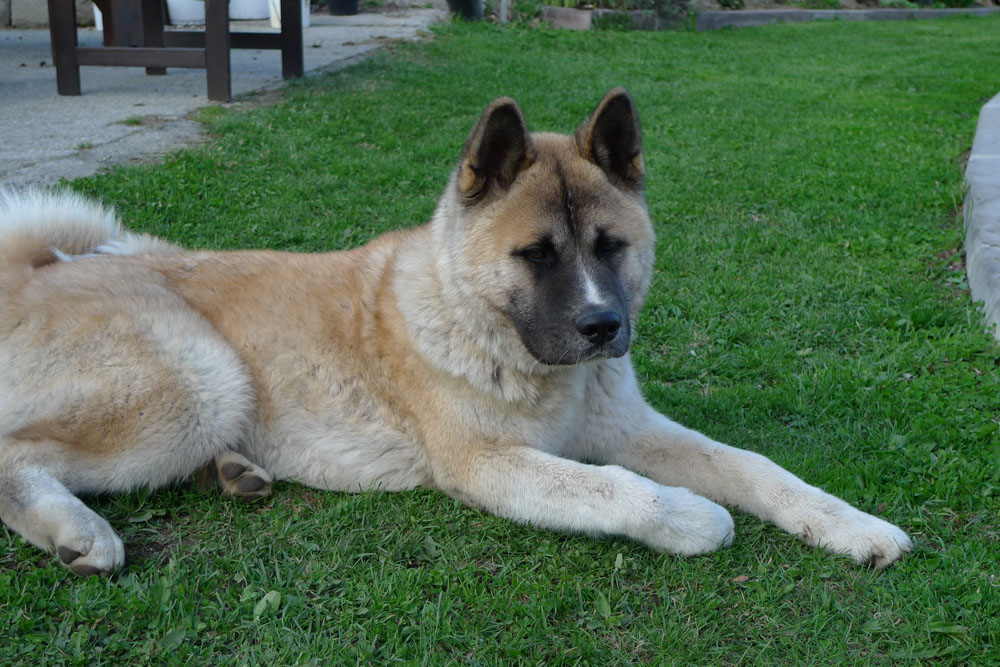
American Akita standing (image from Wikimedia Commons, free to use)
Cost of Owning an American Akita
Purebred puppies from responsible breeders usually cost $1,500 to $3,500 or more. Adoption from rescue is often much lower. The first year can easily reach several thousand dollars. Ongoing annual costs for food, veterinary care, grooming, and potential health screening often exceed $1,500. Budget realistically before adding this large, powerful breed to your home.
Is an American Akita Right for You?
American Akitas suit experienced owners who can provide firm leadership, daily structure, and a stable environment. They thrive with people who earn their respect. An Akita will not beg for your attention. It will decide if you have earned it. This is not a dog that blends into your life. It defines it. Because they are large and powerful, finding a well bred puppy or adult takes careful research. Check local regulations and choose ethical, health tested sources. If you already own an American Akita, consistent rules and positive engagement will keep your dog stable, confident, and content.
Share your experiences with the American Akita in the comments. What has surprised you most about this noble breed? Make sure you are ready for both the deep loyalty and the real responsibility that come with owning one.
Share this guide with others looking for honest information about the American Akita.
Images sourced from Wikimedia Commons (free for reuse with attribution where required). Always check and follow local laws regarding dog breeds. Official links are included for further reading from recognized organizations.
Friday, April 24, 2026
Wednesday, April 22, 2026
Enzo and the turkeys
@enzothebluestaffordshire Everyone says I sound like turkeys but ai dont think they understood me:( #enzothebluestaffordshire #staffordshirebullterrier #fyp #fy ♬ original sound - enzothebluestaffordshire
Sunday, April 19, 2026
Malinois Noise
@funny.cute11 Raishing a Malinois. #dog #malinois #foryou #funnydog #fyp #belgianmalinois ♬ original sound - selenaleacock
Subscribe to:
Posts (Atom)