@barneythetvbordercollie Barney learns we are here to love and be loved.#theboythemolethefoxandthehorse #reaction #react ♬ original sound - Barney the Tv border collie
Sunday, May 31, 2026
My toy will feel my emotions

Saturday, May 30, 2026
Thursday, May 28, 2026
Wednesday, May 27, 2026
Sunday, May 24, 2026
The Otterhound
The Otterhound: An Honest and Complete Guide
This is the giant, shaggy, webbed-footed hound bred to hunt otters in icy British rivers — and it still smells like one.
The Otterhound is one of the rarest breeds on Earth, with fewer individuals alive than Giant Pandas. A massive, rough-coated, pack-oriented hunter with an unmatched ability to track scent in water, it is equal parts gentle giant and boisterous adventurer. Loyal and affectionate with its people, the Otterhound can be a wonderful companion — but only for those who can handle its size, energy, loud voice, and strong-willed personality.
TL;DR – Otterhound Fast Facts
• Rarer than Giant Pandas
• Massive, shaggy water dog with webbed feet
• Legendary scenting ability (even underwater)
• Boisterous, affectionate, and pack-oriented
• Not for small homes or low-energy owners
• Rarer than Giant Pandas
• Massive, shaggy water dog with webbed feet
• Legendary scenting ability (even underwater)
• Boisterous, affectionate, and pack-oriented
• Not for small homes or low-energy owners

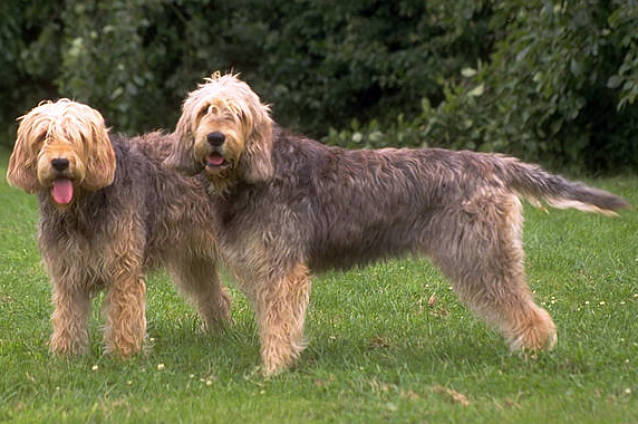
The Otterhound is a large, powerful dog with a dense, rough double coat, webbed feet, and a kind, intelligent expression.
History of the Otterhound
The Otterhound was developed in medieval England to hunt otters that were depleting fish stocks in rivers. These big, rugged hounds worked in packs, using their exceptional swimming ability and powerful noses to track otters underwater and on land. When otter hunting was banned in the UK in 1978, the breed nearly disappeared. Dedicated enthusiasts saved it, but it remains extremely rare today. The American Kennel Club recognized the breed in 1909.
Otterhound head portrait (image from Wikimedia Commons, free to use)
Appearance
Otterhounds stand 24 to 27 inches tall and weigh 80 to 115 pounds. They have a thick, rough, waterproof double coat that can be any color (often grizzle, black & tan, or liver). Their large webbed feet, powerful shoulders, and strong tail make them exceptional swimmers. Their long, pendulous ears and kind expression complete the look of a rugged, medieval working hound. The official American Kennel Club breed standard emphasizes strength, endurance, and the ability to work in water.

Otterhound running (image Photo: k9rl.com via CC BY-SA 4.0)
Temperament
Otterhounds are boisterous, affectionate, and pack-oriented. They are known for their loud, deep baying voice and their joyful, sometimes clumsy enthusiasm for life. They are gentle with their families but can be independent and strong-willed. Their incredible nose means they are easily distracted by scents. Owners often describe them as big, happy clowns who love people but need room to be themselves. Early socialization and patient, positive training are essential.
Are Otterhounds Good Family Dogs?
Otterhounds can make excellent family dogs for active households with older children. They are affectionate, playful, and tolerant when properly socialized. However, their large size, high energy, and strong prey drive make them unsuitable for homes with very young children or small pets. They do best with experienced owners who can provide plenty of exercise and space.
Care and Daily Needs
Otterhounds require:
- Daily exercise and mental stimulation — at least 60–90 minutes of vigorous activity. They love swimming, hiking, and scent work. Without it, they can become destructive or overly vocal.
- Patient, consistent training — they are intelligent but independent. Positive methods and clear leadership work best.
- Socialization — early and ongoing exposure to people, places, and other dogs helps manage their boisterous nature.
- Grooming and feeding — regular brushing to manage the rough coat and a high-quality diet suited to their large size.
Health Considerations
Otterhounds typically live 10 to 12 years. They can be prone to hip dysplasia, elbow issues, and epilepsy. Responsible breeders screen carefully. Because the gene pool is small, finding a healthy puppy from ethical breeders is important.
Cost of Owning an Otterhound
Due to extreme rarity, puppies from responsible breeders often cost $2,500 to $4,000 or more. The first year can easily exceed $4,000. Ongoing annual costs are typically $1,500–$2,500. They are not a low-maintenance or inexpensive breed.
Is an Otterhound Right for You?
Otterhounds suit active, patient owners with space, time, and experience handling large, independent hounds. They thrive with people who appreciate their joyful, sometimes chaotic personality and can give them purpose. Life with an Otterhound is loud, wet, affectionate, and rarely boring. Without proper exercise and leadership, this breed will create its own fun — usually at high volume. If you already have one, daily adventures and affection will keep your Otterhound happy and bonded to you.
Share your experiences with the Otterhound in the comments. What surprised you most about living with this rare and wonderful breed?
Always check and follow local laws regarding dog breeds. Official links are included for further reading from recognized organizations.
The Snow Runner
@sanderscottleelanau Life in a Northern town. #deedeerunsrealestate ♬ Life in a Northern Town - The Dream Academy
Friday, May 22, 2026
Thursday, May 21, 2026
Wednesday, May 20, 2026
Sunday, May 17, 2026
Rook Raggy! Rit's a Rock!!!
@afvofficial A good boy with a good slide 😌 #afv #dogs #funny ♬ original sound - AFVofficial
Saturday, May 16, 2026
The Nova Scotia Duck Tolling Retriever: An Honest and Complete Guide
The Nova Scotia Duck Tolling Retriever: An Honest and Complete Guide
This dog doesn’t just retrieve ducks. It tricks them — by pretending to be a fox.
The Nova Scotia Duck Tolling Retriever is the only breed in the world developed specifically to lure waterfowl within shotgun range by playing and prancing along the shoreline like a fox. With its striking red-gold coat, tireless energy, and clownish personality, the Toller is a high-drive, intelligent companion that can be a fantastic family dog — but only for owners ready to match its intensity.
TL;DR – Nova Scotia Duck Tolling Retriever Fast Facts
• The “fox-playing” duck lure dog
• Smallest of the retriever breeds (35–50 lbs)
• Extremely high energy and intelligent
• Loves water, games, and having a job
• Not for low-activity or first-time owners
• The “fox-playing” duck lure dog
• Smallest of the retriever breeds (35–50 lbs)
• Extremely high energy and intelligent
• Loves water, games, and having a job
• Not for low-activity or first-time owners

The Nova Scotia Duck Tolling Retriever (Toller) is a medium-sized, compact, powerfully built dog with a striking red to orange-red coat and white markings.
History of the Nova Scotia Duck Tolling Retriever
Developed in the early 1800s in Nova Scotia, Canada, the Toller was created to “toll” — to lure ducks by running, jumping, and playing along the shore like a fox. Breeders combined retriever, spaniel, and collie stock to produce a dog that could both decoy and retrieve waterfowl. The breed remained largely unknown outside Canada until the mid-20th century. The American Kennel Club recognized the Toller in 2003.

Nova Scotia Duck Tolling Retriever portrait (image from Wikimedia Commons, CC BY 2.0)
Appearance
Tollers stand 17 to 21 inches tall and weigh 35 to 50 pounds. They have a medium-length, water-repellent double coat in rich red and orange with white markings. Their feathered tail is carried high and wags constantly when excited. They are compact, athletic, and built for both speed and endurance. The fox-like red coat helps them blend into autumn foliage while working. The official American Kennel Club breed standard emphasizes balance, agility, and that distinctive coloring.

Nova Scotia Duck Tolling Retriever running (image from Wikimedia Commons, CC BY-SA 3.0)
Temperament
Nova Scotia Duck Tolling Retrievers are intelligent, eager to please, and full of playful energy. Owners often describe them as having the heart of a comedian trapped in a working dog’s body. They are affectionate with their families and love being involved in everything. They have a strong work drive and thrive when given a job. While generally friendly, they can be reserved with strangers and retain a strong prey drive. Early socialization and consistent, positive training bring out their best.
Are Nova Scotia Duck Tolling Retrievers Good Family Dogs?
Nova Scotia Duck Tolling Retrievers can make excellent family dogs for active households. They are playful, loyal, and great with older children when properly socialized. Their high energy and love of games make them wonderful playmates, but they are not ideal for homes that want a low-energy lap dog or that have very small pets. They do best with owners who can provide daily exercise, training, and mental stimulation.
Care and Daily Needs
Nova Scotia Duck Tolling Retrievers require:
- Daily exercise and mental stimulation — at least 60 minutes of vigorous activity such as retrieving, hiking, agility, or swimming. Without it, boredom quickly turns into excessive barking or destructive behavior.
- Structured training — they are highly intelligent and eager to please but need clear rules and positive methods to channel their energy.
- Socialization — early and ongoing exposure to people, places, and other dogs prevents shyness or over-excitability.
- Grooming and feeding — moderate shedding with weekly brushing and a high-quality diet suited to their active lifestyle.
Health Considerations
With proper care, Tollers typically live 12 to 14 years. Responsible breeders screen for hip and elbow dysplasia, progressive retinal atrophy, and thyroid issues. They are generally hardy and athletic when given appropriate exercise and nutrition.
Cost of Owning a Nova Scotia Duck Tolling Retriever
Puppies from responsible breeders usually cost $1,800 to $3,500. The first year can run $2,500–$4,000. Ongoing annual costs are typically $1,200–$2,000. They are not the cheapest breed due to relative rarity and the need for an active lifestyle.
Is a Nova Scotia Duck Tolling Retriever Right for You?
Nova Scotia Duck Tolling Retrievers suit active, engaged owners who enjoy training, outdoor adventures, and a dog with a unique sense of humor. People who fall in love with a Toller tend to become lifelong fans of the breed. This is not a dog that blends into the background. It brings playfulness, intelligence, and a one-of-a-kind tolling instinct into your home. Without proper outlets and structure, this breed will create its own entertainment — often in ways you won’t appreciate. The Toller is proof that the cleverest hunters in the marsh aren’t always the ones with wings.
Share your experiences with the Nova Scotia Duck Tolling Retriever in the comments. What surprised you most about living with this remarkable breed?
Images sourced from Wikimedia Commons. Official links are included for further reading from recognized organizations.
Friday, May 15, 2026
Wednesday, May 13, 2026
Tuesday, May 12, 2026
Sunday, May 10, 2026
Saturday, May 9, 2026
The Norwegian Lundehund
The Norwegian Lundehund: An Honest and Complete Guide
The Norwegian Lundehund is one of the rarest and most extraordinary dog breeds on the planet — a living piece of Viking-era history with physical abilities found in no other dog. Originally bred to hunt puffins on sheer Norwegian cliffs, this small, agile spitz-type has six toes on each foot, an incredibly flexible neck, and shoulders that rotate like no other breed. Loyal and energetic, it can be a wonderful companion, but its independent spirit and unique needs make it a challenge for most owners. Whether you are thinking about your first Norwegian Lundehund or you already have one, here are the real facts about this one-of-a-kind breed.

The Norwegian Lundehund is a small, rectangular, and remarkably flexible dog with a dense double coat and distinctive markings.
History of the Norwegian Lundehund
Originating on the remote island of Værøy in northern Norway, the Lundehund was developed specifically to hunt puffins in narrow caves and on steep cliffs. Written records date back to the 1500s, but the breed nearly vanished in the 20th century when puffin hunting was banned and canine distemper decimated the population. Dedicated Norwegian breeders saved it from extinction. Today it remains one of the rarest breeds in the world. The American Kennel Club recognized the breed in 2011.

Norwegian Lundehund showing erect ears (image from Wikimedia Commons, free to use)
Appearance
Norwegian Lundehunds stand 12 to 15 inches tall and weigh 13 to 20 pounds. They have six toes on each foot, extremely flexible necks that can bend backward until the head touches the back, and shoulders that allow them to crawl into tight spaces. Their ears can fold and clamp shut to protect against dirt and water. The official American Kennel Club breed standard highlights this extraordinary flexibility and agility.

Norwegian Lundehund profile (image from Wikimedia Commons, free to use)
Temperament
Norwegian Lundehunds are alert, energetic, and fiercely loyal to their families. They are playful and clever but can be independent and strong-willed. Many are wary of strangers and have a sensitive nature that responds best to gentle, positive training. Owners often describe them as curious little problem-solvers that always seem to be studying the world around them. They form tight bonds with their people and want to be involved in daily life. This is a thinking breed that was designed to solve problems on its own in dangerous cliff terrain — nature built this dog for cliffs, caves, and impossible terrain, and it still acts like it.
Are Norwegian Lundehunds Good Family Dogs?
Norwegian Lundehunds can make excellent family dogs in the right home. They are playful and loyal with their own people and often do well with older children when properly socialized. However, they are not ideal for homes with very young kids or small pets, as they retain a strong prey drive from their puffin-hunting days. They thrive with experienced owners who understand their independent nature and can provide structure without harsh methods.
Care and Daily Needs
Norwegian Lundehunds require:
- Daily exercise and mental stimulation — at least 45-60 minutes of vigorous activity such as hiking, agility, or climbing. Without it, boredom leads to mischief or excessive barking.
- Patient, positive training — they are intelligent but can be stubborn. Harsh methods damage their sensitive nature.
- Socialization — early and ongoing exposure to people, places, and other dogs helps reduce wariness.
- Grooming and feeding — moderate shedding with weekly brushing and a high-quality, low-fat diet to support their often sensitive digestive system.
Health Considerations
Norwegian Lundehunds are generally hardy but can suffer from Lundehund syndrome (a serious digestive disorder), patellar luxation, and eye issues. Responsible breeders screen carefully. Regular veterinary check-ups and a low-fat diet are important for long-term health. With good care, they typically live 12 to 15 years.
Cost of Owning a Norwegian Lundehund
Because the breed is so rare, puppies from responsible breeders usually cost $2,000 to $4,000 or more. The first year can easily reach $3,000–$5,000. Ongoing annual costs are typically $1,200–$2,000. They are not a low-cost breed due to rarity and potential health needs.
Is a Norwegian Lundehund Right for You?
Norwegian Lundehunds suit experienced, patient owners who can provide daily physical and mental challenges and gentle leadership. People who fall in love with the Norwegian Lundehund tend to become lifelong advocates for the breed. This is not a dog that blends into the background. It brings agility, intelligence, and a piece of living history into your home. Without proper outlets and structure, this breed will create its own adventures — often in ways you won’t appreciate. If you already have one, consistent positive engagement will keep your Lundehund happy, confident, and bonded to you.
Share your experiences with the Norwegian Lundehund in the comments. What do you love most about this rare and remarkable breed? If you are considering one, take time to understand its unique needs and extraordinary abilities.
Share this guide with others looking for honest information about the Norwegian Lundehund.
Always check and follow local laws regarding dog breeds. Official links are included for further reading from recognized organizations.
Friday, May 8, 2026
Tuesday, May 5, 2026
Sunday, May 3, 2026
The Manchester Terrier
The Manchester Terrier: An Honest and Complete Guide
The Manchester Terrier is one of the most underrated small breeds — fast, sharp, and far more capable than most people expect. Sleek, racy, and full of true terrier spirit, it combines the grace of a hound with the alertness of a ratter. Loyal and lively, it can be a fantastic companion, but it has a strong personality that needs an owner who can keep up. Whether you are thinking about your first Manchester Terrier or you already have one, here are the real facts about this spirited breed.

The Manchester Terrier comes in two sizes: Standard (up to 22 pounds) and Toy (up to 12 pounds). Both are black with rich tan markings, short glossy coats, and an alert, athletic build.
History of the Manchester Terrier
Developed in 19th-century England, the breed was named after the city of Manchester. Breeders crossed the Black and Tan Terrier with Whippets to create a fast, efficient ratter and companion. The American Kennel Club recognized the varieties in the late 1800s. Today the Manchester Terrier is valued as a lively family dog and show competitor rather than just a working ratter.

Manchester Terrier showing erect ears (image from Wikimedia Commons, free to use)
Appearance
Manchester Terriers are sleek and athletic. The Standard variety is more substantial, while the Toy is a smaller version with naturally erect ears. Both have distinctive black-and-tan markings, a short glossy coat, and a tapered tail. They move with speed and grace. The official American Kennel Club breed standard emphasizes a racy, balanced look that reflects their working heritage.

Manchester Terrier profile (image from Wikimedia Commons, free to use)
Temperament
Manchester Terriers are intelligent, alert, and full of energy. They bond tightly with their people and want to be involved in everything you do. These dogs are playful and spirited, but they can be independent and strong-willed. They make good watchdogs and are reserved with strangers. Early socialization helps them become confident around new people and other dogs. This is a small dog that thinks like a big one — do not mistake size for softness. They are too smart to be ignored and too active to be bored.
Are Manchester Terriers Good Family Dogs?
Manchester Terriers can make excellent family dogs for active households. They are playful and loyal with their own people and often do well with older children. However, they are not the most tolerant of rough play or very young kids unless raised with them. They do best with owners who can provide structure, exercise, and leadership. They are not ideal for homes that want a low-energy lap dog or that have very small pets they might view as prey.
Care and Daily Needs
Manchester Terriers require:
- Daily exercise — at least 30-60 minutes of walks, play, or training. Without it, their intelligence and energy can turn into mischief or excessive barking.
- Structured training — they are smart and respond well to positive methods but need consistent rules to manage their independent streak.
- Socialization — early and ongoing exposure to people, places, and other dogs prevents shyness or reactivity.
- Grooming and feeding — minimal grooming for the short coat and a high-quality diet suited to their size and activity level.
Health Considerations
Manchester Terriers are generally hardy and long-lived. Common concerns include patellar luxation and certain eye or heart issues. Responsible breeders screen for these. Good nutrition and regular veterinary care keep them healthy for many years.
Cost of Owning a Manchester Terrier
Puppies from responsible breeders typically cost $800 to $2,000. The first year can run $1,500–$3,000. Ongoing annual costs are usually $800–$1,500. They are relatively low-maintenance compared to larger breeds.
Is a Manchester Terrier Right for You?
Manchester Terriers suit active people who enjoy a lively, intelligent companion that needs engagement. They thrive with owners who provide leadership and daily activity. This is not a dog that blends into the background. It brings personality and energy to your home. Without structure, this breed will run the house faster than you expect. Make sure you are ready for a dog that will challenge you as much as it entertains you.
Share your experiences with the Manchester Terrier in the comments. What do you love most about this breed? If you are considering one, take time to understand its energy and strong personality.
Share this guide with others looking for honest information about the Manchester Terrier.
Always check and follow local laws regarding dog breeds. Official links are included for further reading from recognized organizations.
Subscribe to:
Posts (Atom)