The Staffordshire Bull Terrier: An Honest and Complete Guide
The Staffordshire Bull Terrier is one of the most loyal and people-focused breeds, yet it remains one of the most misunderstood. Its muscular build and historical roots often lead to unfair assumptions. Whether you are researching your first Staffy or you already live with one, this guide provides straightforward facts about the breed, including both its strengths and the realities of ownership.

The Staffordshire Bull Terrier, commonly known as a Staffy, is a medium-sized dog with a compact, muscular body and a strong desire for human companionship. Owners often report that these dogs form deep bonds with their families and thrive when included in daily life.
History of the Staffordshire Bull Terrier
The breed originated in the Staffordshire region of England during the 19th century through crosses between the old type Bulldog and various terriers. After blood sports were outlawed, dedicated breeders shifted focus toward creating a reliable companion. The Kennel Club in England recognized the breed in 1935. The American Kennel Club granted recognition in 1974. Today, the Staffordshire Bull Terrier is valued as a family companion rather than for any past working role.
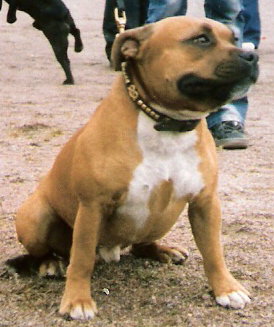
Smiling fawn and white Staffordshire Bull Terrier (image from Wikimedia Commons, free to use)
Appearance
Staffordshire Bull Terriers stand 14 to 16 inches tall at the shoulder. Males typically weigh 28 to 38 pounds, while females weigh 24 to 34 pounds. They feature a broad head, powerful jaws, and a short, smooth coat. Colors include brindle, fawn, red, blue, black, white, or combinations with white markings. The build is compact and athletic. The official breed standard from The Kennel Club outlines the ideal characteristics in detail.
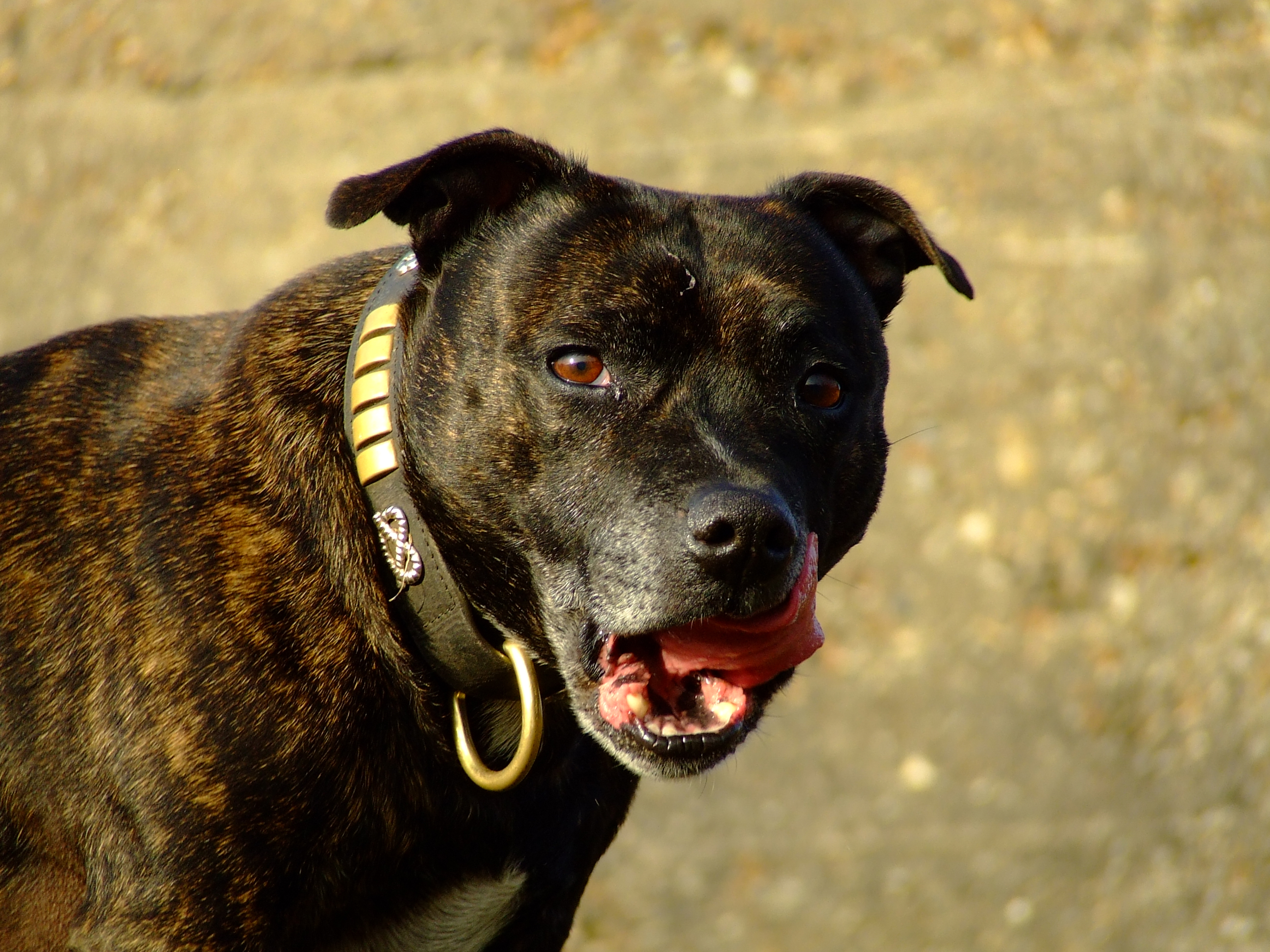
Brindle Staffordshire Bull Terrier portrait (image from Wikimedia Commons, free to use)
Temperament
Staffordshire Bull Terriers are affectionate and strongly people-oriented. They often form close bonds with children in the household when raised with consistent training and supervision. The breed is playful, intelligent, and eager to please its owners. Many Staffies are naturally dog-selective, which should be expected and managed through early and continued socialization. The Kennel Club breed standard describes them as bold and totally reliable with those they know.
Reality and Common Misconceptions
The Staffordshire Bull Terrier frequently faces an undeserved reputation for aggression. Its stocky, muscular appearance leads some to assume it is dangerous or to confuse it with pit bull-type dogs. Staffordshire Bull Terriers are a distinct, separately recognized breed and are not covered by the United Kingdom's Dangerous Dogs Act restrictions that apply to certain pit bull types.
Staffies differ from American Pit Bull Terriers in size and build. Staffies are generally smaller and more compact (14-16 inches tall, 24-38 pounds), while American Pit Bull Terriers tend to be taller and rangier (typically 17-21 inches and 30-60+ pounds). Any dog can become problematic if poorly bred, untrained, or mismanaged. The muscular look does not equate to inherent aggression toward people. Most well-raised Staffies are friendly and affectionate with their families.
This is not a passive or low-effort breed. Without structure, leadership, daily exercise, and consistent training, behavioral issues can develop. Responsible ownership makes the difference.
Are Staffordshire Bull Terriers Good Family Dogs?
Yes, Staffordshire Bull Terriers can make excellent family dogs for the right households. They are loyal, affectionate, and often patient with children in the home when properly socialized and supervised. They thrive on being part of family activities and do not do well when left alone for long periods. Success depends on active owners who provide training, socialization, and clear boundaries.
Care and Daily Needs
Staffordshire Bull Terriers require:
- Daily exercise — at least one hour of walks, play, and interactive games such as fetch to stay physically and mentally balanced.
- Structured training — they respond well to positive reinforcement but can show stubbornness. Short, consistent sessions work best.
- Consistent boundaries and socialization — early exposure to different people, environments, and other dogs is essential.
- Proper feeding — a high-quality diet suited to their age and activity level, with careful portion control to avoid weight gain.
Health Considerations
Staffordshire Bull Terriers generally live 12 to 14 years with proper care. Reputable breeders screen for issues such as hip dysplasia and certain eye conditions. A breed-specific genetic disorder is L-2-hydroxyglutaric aciduria (L2-HGA), which can affect the nervous system. The Kennel Club provides information on DNA testing for L2-HGA. Routine veterinary visits, good nutrition, and regular exercise support long-term health.

Staffordshire Bull Terrier in side profile (image from Wikimedia Commons, free to use)
Cost of Owning a Staffordshire Bull Terrier
Purebred puppies from responsible breeders typically cost $1,000 to $3,000 or more, depending on location and lineage. Adoption fees are usually much lower. The first year (including supplies, spay/neuter, initial veterinary care, and training) can total several thousand dollars. Ongoing annual expenses for food, routine vet care, and other needs often run $1,000 or higher. Budget realistically before adding a Staffy to your home.
Is a Staffordshire Bull Terrier Right for You?
Staffordshire Bull Terriers suit active households that can commit time to training, socialization, and daily interaction. They thrive as part of the family but do not cope well with long periods alone. The breed requires confident, consistent leadership. Before bringing one home, research and comply with any local breed-specific legislation. Choose puppies or adults from ethical breeders who health-test or from reputable rescues. If you already own a Staffy, ongoing positive experiences and clear boundaries help maintain a stable, enjoyable companion.
Share your experiences with the Staffordshire Bull Terrier in the comments. What has been the most rewarding or challenging aspect for you? If you are considering this breed, take time to understand both the joys and the responsibilities involved.
Share this guide with others seeking honest information about the Staffordshire Bull Terrier.
Images sourced from Wikimedia Commons (free for reuse with attribution where required). Always check and follow local laws regarding dog breeds. Official links are included for further reading from recognized organizations.

No comments:
Post a Comment
Note: Only a member of this blog may post a comment.